Saturday, November 30, 2013
Friday, November 29, 2013
'Sri Maha Bodhi', Anuradhapura, Sri Lanka.
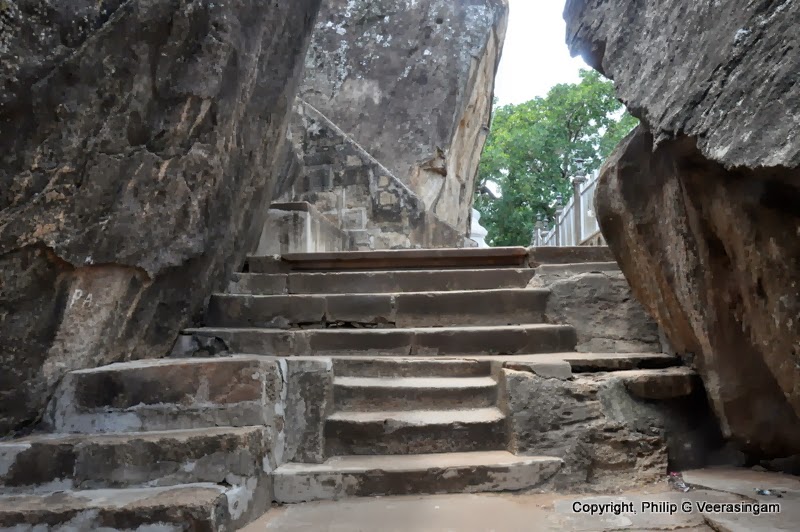
| The 'Makara' emblem used to line a stairway of an old building at the site. |
'The makara has the trunk of an elephant, the feet of a lion, the ears of a pig, the body of a fish living in water, the teeth turned outwards, eyes like Hanuman's, and a splendid tail'. -'Mediaeval Sinhalese art' by Ananda K Coomaraswamy (1908)
| Water lily flowers awaiting sale to the devotees. |
| Buds of water lilies. |
| Flowers on a tree in the premises. |
Thursday, November 28, 2013
'Sri Maha Bodhi', Anuradhapura, Sri Lanka.
| The entrance to the site. |
| An ancient 'Guard-stone' chiselled out of granite.. |
| Devotees offering fresh flowers. |
| The sacred 'Bo tree' with a fence of gold railings. |
After bringing Buddhism to Sri Lanka by
Mahinda Thero in 250 BC Emperor Asoka in India sent his daughter Theri
Sanghamitta to the island with a branch of the Sacred Bodhi obtained from the
main stem of the bodhi tree in Bodh Gaya under which Buddha attained
enlightenment. The king Tissa received the sapling and planted it at the
present site in 249 BC. Taking this information to account today (in 2013) the Sri Maha Bodhitree
is exactly 2263 years old. Thus this tree is the oldest tree in world in the
recorded history. Even after the Anuradhapura was deserted as the capital of the country and
encroached by the jungle, pious people nevertheless tendered to the tree
effortlessly. The villagers lit bonfires to frighten off wild elephants. As the
time went on the villagers made it a habit to collect firewood for the whole
year on one single day. This possession was called “Daramiti Perahara”
(Firewood Possession) which continues up to this day.
Wednesday, November 27, 2013
Tuesday, November 26, 2013
Monday, November 25, 2013
Mirisawetiya Dagoba, Anuradhapura, Sri Lanka.
The Mirisaveti Stupa is
situated in the ancient city of Anuradhapura, Sri Lanka.[1] King Dutugamunu built
the Mirisaveti Stupa after defeating King Elara. After placing the Buddha relics in the sceptre, he
had gone to Tisawewa for a bath leaving the sceptre. After the bath he returned
to the place where the sceptre was placed, and it is said that it could not be
moved. The stupa was built in the place where the sceptre stood. It is also
said that he remembered that he partook a chilly curry without
offering it to the sangha. In
order to punish himself he built the Mirisavetiya Dagaba. The extent of this
land is about 50 acres (20 ha). Although the king Kasyapa
I and Kasyapa
V renovated
this, from time to time it was dilapidated. What stands today is the renovation
done by the cultural Triangle Fund.
Web-link:-
Sunday, November 24, 2013
Saturday, November 23, 2013
'Sivura paevareema', Sri Jayabodhi Viharaya, Avissawella, Sri Lanka.
| The procession conducting the monks to the site of the ceremony. |
![]() |
| The 'confession'. |
| Getting onto the 'Seemaa maluwa' float. |
| The donation of the robe. |
| "Gaathaas' being recited. |
Click on the web-link below to view some videos I took and posted on my site, on Youtube.:-
Friday, November 22, 2013
'Sivura paevareema, Sri Jaya Bidhi Vihare, Avissawella, Sri Lanka.
| The road through a rubber estate leading to the site of the ceremony. |
| The stream dammed up to create a pool for the float. |
| Devotees by the side of the pool on which flowers have been sprinkled. |
| The decorated float. |
| Decorations made of young coconut leaves and flowers on the float. |
The retreat of Buddhist monks during the rainy season of the year is called 'Vas'. The book of 'Vinaya' - rules in the Buddhist canon has rules regarding the observance of 'Vas'. At the end of 'Vas' there is an act called 'Sivuru pavaereema'. This involves the giving of a fresh set of robes to the monk. The robe during the Saakyamuni's presence on earth was made by collecting the clothing covering corpses and from these a patch-work robe was stitched. This was then washed, dyed, allowed to dry and was given to the monk. The present day rituals in Sri Lanka involves laymen buying a white linen cloth, cutting it, making a robe by stitching, washing and dyeing it and then drying it. A special enclosure called a 'Seema maluwa' is made on land or water. The priests taking part in the ceremony have to confess of any transgressions made to another monk of 'Upasampadaa' rank. If there are no transgressions demanding dismissal - 'Paaraajika' - the monks are led to the enclosure. The monks then do the donation of the robe ceremonially, reciting the appropriate 'Gaathas'. No one else is allowed to enter this 'Seema maluwa' other than monks holding a rank post 'Upasampadaa'.
The above are some of the scenes of preparation for this event held for the Chief Monk, Rev Gonagala Somaloka, at the Jayabidhi Vihara, Avissawella, Sri Lanka.
These traditions have been observed in Sri Lanka for more than 2000 years.
Click on the web-link below to view some videos I took and posted on my site, on Youtube.:-
Thursday, November 21, 2013
Wednesday, November 20, 2013
Tuesday, November 19, 2013
Subscribe to:
Comments (Atom)